Showing posts with label fast car. Show all posts

Sunday, December 20, 2009

2010 Ac Schnitzer ACS3 3.5d Sports Coupe Never Tires Of Receiving Awards

2010 Ac Schnitzer ACS3 3.5d Sports Coupe

Ac Schnitzer ACS3 3.5d Sports Coupe, AC Schnitzer never tires of receiving awards. Very recently, the carmaker got a third world record for Aachen after having gone to Nardo in southern Italy. Third World Record in Succession: AC Schnitzer builds fastest diesel car! AC Schnitzer ACS3 3.5d Coupé reaches 288.7 km/h in Nardo. It's a hat-trick: for the third time, AC Schnitzer has gone to Nardo in southern Italy and brought home a third world record for Aachen.
2010 Ac Schnitzer ACS3 3.5d Sports Coupe

Historically, many records are set in the high-speed circuit. Each year in southern Italy, in collaboration with the AUTO BILD sportscars’ editors and under the aegis of Continental AG, the top vehicle tuners compete. This year, it was on Oct. 18-19, 2009. The record for the fastest road-legal diesel car was broken by the AC Schnitzer ACS3 3.5d Coupe with a speed of more than 8.7 km/h.288.7 km/h.
2010 Ac Schnitzer ACS3 3.5d Sports Coupe

This was the figure on the display of the GPS speedometer system on the 13 km long high-speed circuit after the lap of the AC Schnitzer ACS3 3.5d Coupé. The record that was broken had been that of 2006 with the TENSION as the fastest road-legal BMW. The record had held in 2007 when the GP3.10 GAS POWERED entered to represent gas-powered vehicles. AC Schnitzer cited its power upgrade as the reason for its success.
2010 Ac Schnitzer ACS3 3.5d Sports Coupe

Naturally the power upgrade which took the latest world record holder to success is part of the extensive AC Schnitzer special accessory range and available for all vehicles based on the 3.5d engine. It is TÜV-approved and available from BMW dealers.

2010 Ac Schnitzer ACS3 3.5d Sports Coupe

Another impressive performance in Nardò came from the AC Schnitzer ACS4 3.5 turbo (based on the BMW Z4 sdrive 35i). At 303.1 km/h, this was not a new world, but such a high speed is almost unheard of for a Roadster. The Z4 was also running with the commercial version of the AC Schnitzer performance upgrade for 3.5i engines.

READ MORE - 2010 Ac Schnitzer ACS3 3.5d Sports Coupe Never Tires Of Receiving Awards

Friday, December 18, 2009

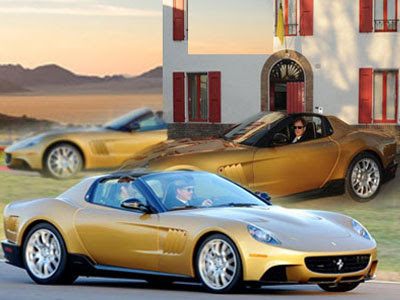
2010 Ferrari P540 Superfast Aperta Inspired By One Of The Tales Of Edgar Allan Poe

2010 Ferrari P540 Superfast Aperta

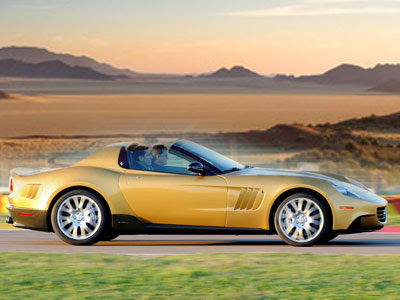
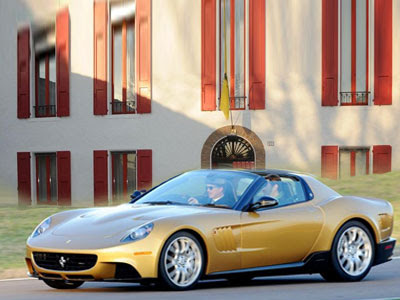
2010 Ferrari P540 Superfast Aperta. The car, the second in a new Special Projects programme created by Ferrari to meet requests from the most discerning clients and collectors to create truly unique models, is based on the Ferrari 599 GTB Fiorano and was inspired by a Carrozzeria Fantuzzi-designed Ferrari built specifically for the 1968 Fellini film, Toby Dammit, itself inspired by one of the tales of Edgar Allan Poe. The first shake-down has been held at Fiorano of a very special one-off, the Ferrari P540 Superfast Aperta, built for an American client.
2010 Ferrari P540 Superfast Aperta
The Ferrari P540 Superfast Aperta's proud new owner, Edward Walson, son of John Walson, the inventor of cable TV, approached Ferrari in 2008 to produce a modern reinterpretation of the gold-coloured car in the film. "I had always dreamed of designing sports cars," Walson explains, "and when I saw this film the decision came of its own accord: one day I would have 'my' Ferrari."
2010 Ferrari P540 Superfast Aperta
In accordance with the Special Project's approach to producing such individual one-offs, the Ferrari P540 Superfast Aperta respects all existing international safety and homologation requirements and is thus road legal. The car was designed by Pininfarina and built in Maranello, and the client was directly involved in each stage of its development. As the 599 GTB Fiorano donor car is a coupé, considerable effort went into strengthening the chassis by using finite element analysis in development and the increase in weight was kept down to just 20 kg by employing carbon-fibre extensively. From the initial sketches to the final, road-legal car took just 14 months. As the client took delivery of the car at Fiorano his excitement was understandable: "This is the most special Christmas present of my life."
2010 Ferrari P540 Superfast Aperta
This special Ferrari P540 Superfast Aperta's colour was inspired by the film "Toby Dammit", one of the three episodes of the film "Histoires Extraordinaires" made in 1968 based on stories by Edgar Allan Poe.
"Toby Dammit", the third of the three episodes, directed by Federico Fellini, with Terence Stamp Salvo Randone and Milena Vukotic, based on the story "Never Bet The Devil Your Head".
The other two episodes, "Metzengerstein" and "William Wilson", were directed by Roger Vadim and Louis Malle.
2010 Ferrari P540 Superfast Aperta
Technical specifications :
# Length: 4731 mm
# Width: 1954 mm
# Height: 1300 mm
# Wheelbase: 2750 mm
# Front track: 1690 mm
# Rear track: 1620 mm
2010 Ferrari P540 Superfast Aperta
# Engine
- Type: 65° V12
- Displacement: 5999 cc
- Maximum power: 456 kW (620 CV) at 7600 rpm
- Maximum torque: 608 Nm (62 kgm) at 5600 rpm
# Transmission: F1 6-speed gearbox
# Tyres
- Front: 245/35 20"
- Rear: 305/35 20"
# Fuel consumption
- Combined cycle: 17.9 l/100 km
- CO2 emissions: 415 g/km
READ MORE - 2010 Ferrari P540 Superfast Aperta Inspired By One Of The Tales Of Edgar Allan Poe

Thursday, November 19, 2009

Keating TKR Super Cars LS7 engine, two turbochargers to make its power skyrocket.

Keating TKR/SKR Super Cars

The search for the fastest car in the world title is still far from complete. If the Bugatti Veyron seems to be unbeatable with its 1001 HP and more than 400 km / h, it was the South-South cooperation Ultimate Aero and pushed the bar a little higher, at exactly 413.83 km / h with its HP 1199 and 1247 kg. Now, British car manufacturers want to regain the crown from the possession of the McLaren F1 in a manner very convincing, more precisely with the TKR Keating. Since there is no official data on the performance has been made available on that day, you can imagine what 1190 kg and 1500 hp supercar can do, but you do not have much imagination to the records May rapidly in dust…
Keating TKR/SKR Super Cars

The new car version and its soft, the Swedish kroner, were last Wednesday in South Portland, United Kingdom. The two are on a steel space frame structure, but it allows a structure made of carbon fiber to support the weight even more. The bodies are made of fiberglass, carbon fiber, but also the facilities are available as an option. These vehicles are Keating 4.31 m long, 1.87 m wide and 1.15 m in height. The British automobile manufacturer is already orders for them, but the supplies did not occur by the end of the year. No hurry, because the customers have to wait for their luck in any case: SKR and the TKR is being built in a limited quantity to them and to ensure that only quality standards.
Keating TKR/SKR Super Cars

British supercar manufacturer and challenger for the production car world land speed record, Keating, will have its 260.1mph TKR supercar on display at this year’s MPH Show featuring Top Gear Live at London’s Earls Court on 5 November.
Keating TKR/SKR Super Cars

In the first of two runs on the Salt Lake Flats in California last month, the remarkable 7.0 litre, 1800 BHP Keating TKR smashed the current record, adding an extra 3 mph to the top speed of existing title holder, the Shelby Aero TT.The TKR will probably have the LS7 engine as its base, but two turbochargers are expected to make its power skyrocket to 1,500 hp. This number can be even higher, since the supercar is still under development.Now the Manchester based company must do it again to ensure entry in the Guinness Book of World Records.
Keating TKR/SKR Super Cars

But before it returns to California, the breathtaking Keating TKR will make its MPH show debut in London tomorrow in front of capacity crowds.
Tony Keating, founder of Keating Supercars, said: “The Keating TKR realises our ambition to take on the world’s finest supercars and win. This car rivals them all for looks, handling, performance and exclusivity. And best of all, it’s British.”
READ MORE - Keating TKR Super Cars LS7 engine, two turbochargers to make its power skyrocket.

Tuesday, November 17, 2009

2009 Lumma CLR 730 RS based on the BMW M5 E60 One of the Fastest Sports Car Limousine worldwide.2

2009 Lumma CLR 730 RS


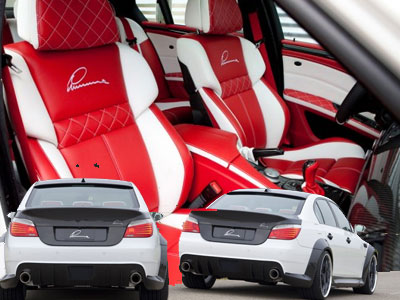
2009 Lumma CLR 730 RS, One of the fastest limousine worldwide, With a unique combination of High Tech engineering and an innovative, solely for maximum power constructed design, LUMMA Design introduces, in cooperation with G-Power. Do you need a true-bred sports car for a spectacular appearance? By no means! With this unique sports limousine CLR 730 RS LUMMA Design, basic vehicle BMW M5 E60, benches many sport cars. Ten cylinders, bi compressor engine, 730 hp and 700 Nm. Is there any room for improvement? Definitely not! The new LCR 730 RS from LUMMA Design is a commitment to racing. But also concerning style and luxury the CLR 730 RS goes strong.
2009 Lumma CLR 730 RS

Aerodynamics is of elementary importance to get a more then 360 km/h maximum speed. The body of the BMW M5 is improved with ultra light but extremely compact carbon components. The LUMMA Bodykit "CLR 730 RS" consist of a hood, a trunk lid with integrated tearing edge, mirror caps, door handles, entrance strips and fenders - all made of carbon.
Extra light and forged wheels were produced for the ultra broad track. On the front axle are LUMMA Racing rims in 10x21" with tires size 255/30-21, on the rear axle 12Jx21 with tires from Michelin size 295/25-21. The wheelwork is three piece crafted, the rim star is forged, and dull black anodized and has stainless steel outer rims.

2009 Lumma CLR 730 RS

The combination of lightweight, enormous engine power and innovative aerodynamics the LUMMA CLR 730 RS from Winterlingen achieves acceleration times which were so far only subject to true race cars. The 730 hp V10 bi-compressor engine obstructed from G-power is the most powerful engine that has ever been obstructed into a road-legal BMW. Off the top off one's head the car catapults itself within 4.2 seconds up to speed 100. After 10 seconds the sport limousine has already doubled the speed. After 29.5 seconds the car achieves 300 km/h. Top speed is at 367,4 km/h. This power explosion is traced back to the core of the G-Power compressor system, the ASA radial compressor. Also used is a LUMMA sport exhaust system with 100 cells racing catalysts and 105 mm end pipes made of stainless steel and engraved LUMMA logo.
2009 Lumma CLR 730 RS

The LUMMA Bodykit “CLR 730 RS” consist of a hood, a trunk lid with integrated tearing edge, mirror caps, door handles, entrance strips and fenders – all made of carbon. The Lumma CLR 730 RS sport suspension is multiple adjustable on both axles in bound and rebound and lowering the car up to 45 mm. On the front axle are LUMMA Racing rims in 10×21″ with tires size 255/30-21, on the rear axle 12Jx21 with tires from Michelin size 295/25-21.
READ MORE - 2009 Lumma CLR 730 RS based on the BMW M5 E60 One of the Fastest Sports Car Limousine worldwide.2

Wednesday, May 27, 2009

Bentley Continental GT Supersports

Bentley Continental GT Supersports

Yes a Bentley.
The Bentley Continental GT Supersports is the first Bentley that can run on gasoline and ethanol.
And the performance is staggering.
This luxury car has a 6.0L W12 twin-turbocharged engine rated at 621 horsepower and it puts out 590 foot pounds of torque.
The GT can pull 0 to 60 in just 3.7 seconds, 0 to 100 in 8.9 seconds and has a top speed of 204 mph.
The power comes at a price in more ways than one.
MPG in the city is 11.5 and highway is 24.4.
I don't know if that's cruising at 200 mph plus or not.

So Go Green!
Save the Earth!
Turn 0 to 60 times in 3.7 seconds and cruise at 200 plus mph!
And you only have to pay $267,000 (base price) to do it!
READ MORE - Bentley Continental GT Supersports

Tuesday, May 19, 2009

Ferrari Testarossa F512 M

Ferrari Testarossa F512 M

The Ferrari Testarossa F512 M is a 12-cylinder mid-engine sports car manufactured by Ferrari.
The F512 M was powered by a 4.9 litre (302 cubic inches) Ferrari Colombo Flat-12 engine.
BTW, the name Testarossa means "red head" in Italian and the car was named that because the cam covers were painted red.
Of course it has a double meaning because Ferrari regularly uses terms related to a female's body when describing the style of their automobiles.
You have to love the Italians!
Anyway, the Flat-12 engine puts out 440 horsepower and 406 foot pounds of torque.
That allows the F512 M go from 0-60 in 4.8 seconds, 0-100 in 10.2 seconds and cover the quarter mile in 12.7 seconds at 112 mph.
The maximum speed of the F512 M is 196 mph.
In 1995, the F512 M retailed for $220,000.

READ MORE - Ferrari Testarossa F512 M

Thursday, February 19, 2009

Mercedes-Benz CL65 AMG

Image Hosted by ImageShack.us

Comfort, style and speed.
The Mercedes-Benz CL65 AMG is powered by a 6.0 litre V12 BiTurbo engine that puts out 612 horsepower and 737 foot pounds of torque.
That allows this beauty to go from 0 to 60 in 4.2 seconds.
This also gives the CL65 an 11.8 second quarter mile time at 120.9 mph.
It's estimated top speed is 186 mph.
The downside of this car is that the CL65 AMG is made to order in very small numbers.
And for the mundane stuff, the MPG is 11 in the city, and 17 on the highway.
The base price is around $203,700.
READ MORE - Mercedes-Benz CL65 AMG

Friday, February 13, 2009

2005 Maserati MC12

Image Hosted by ImageShack.us

This land rocket is powered by an Enzo Ferrari-derived V12 engine (the MC12 is also designed and built on the Enzo Ferrari chassis).
The six-liter (366 cu in) delivers 624 horsepower and 481 pounds of torque.
This gives the MC12 a 0-62 time of 3.8 seconds and a quarter mile time of 11.8 seconds at 123.9 mph.
The top speed of the Maserati MC12 is 205 mph.
So what's bad about the MC12?
No trunk, no rear window, no spare tire and no radio.
No trunk, no rear window, no spare tire and no radio? It sounds like the 65 Rambler I used to have.
Anyway, only 50 of these bad boys were made.
And they all pre-sold for around $774193 dollars.

PS:
We're getting rid of our 1988 Jaguar XJ6 Vanden Plas.
Dont have the time to do restoration on it.
If you wanna take a look, her's the link.....
http://greensboro.craigslist.org/cto/1036831907.html
READ MORE - 2005 Maserati MC12

Tuesday, February 3, 2009

The Ferrari 599 GTB Fiorano

Image Hosted by ImageShack.us

Another VERY quick car, the Ferrari 599 GTB Fiorano is powered by a 6.0 L (5999 cc, hence the 599 in the name) V12 engine that produces a maximum of 612 horsepower and 448 pounds of torque.
This gives the Ferrari an 11.3 second quarter mile time at 126.4 mph.
Ferrari say's the cars top speed is in excess of 205 mph.
And they list a 0-160 time of 19 seconds.
Mileage?
11 mpg in the city, 15 mpg on the highway.
I wonder if thats at 205 mph?
And on the Tech side, the 599 GTB is the first Ferrari to come with an iPod connection as standard.
READ MORE - The Ferrari 599 GTB Fiorano

Friday, January 30, 2009

The Lamborghini Gallardo LP560-4

Image Hosted by ImageShack.us
In the world's fastest cars, we've already had two entries, the Lamborghini Murciélago LP640 and the Lamborghini Reventón.
But the Lamborghini Gallardo LP560-4 deserves honorable mention.
This Lambo is powered by a 5.2L V10 (based on the Audi RS6 V10) with FSI direct injection, generating 560 horsepower and 398 ft·lbs of torque.
This allows the LP560-4 to run the quarter mile in 11.2 seconds at 130 mph.

But wait, the Murcielago LP640 can go 0 to 60 in 3.5 seconds, and the LP560-4 can manage 0-60 in 3.3 seconds.......
So is the LP560-4 really faster by .2 seconds?
And the LP640 has a quarter mile time of 11.8 seconds at 126 mph.....
I think I have to change my original post.
It appears the LP560-4 IS faster!

And what does the Lamborghini Gallardo cost?
Around $180,000 to $210,000.
READ MORE - The Lamborghini Gallardo LP560-4

Tuesday, January 20, 2009

The Mosler MT900S


Okay this is not a widely produced car.
As a matter of fact, unless you are George Lucas (he took delivery of the first street legal one in December 2006), you may not have ever heard of it.
The MT900s is built by Mosler Automotive.
It's powered by a Corvette LS6 V8 with an Eaton supercharger, with a maximum boost pressure of 6.0 psi.
This gives the 346 inch engine 600 bhp and 557 foot pounds of torque.
In real time that allows the MT900S to get from 0 to 60 in about 3.1 seconds, 0 to 100 in 6.5 seconds and 0 to 150 in 13.8 seconds.
And it also enables the MT900S to blast through the traps at 135 mph in 11 seconds.
Base price is about $189,000.
Or you can add around $50,000 and opt for the MT900S Photon, which is 220 pounds lighter than the MT900s and has a few extra goodies.
And you know, the MT900 gets 15 mpg in the city and 22 mpg on the highway.
Thats really not too shabby for a 600 horsepower car.
A Lamborghini Murcielago only gets 8 mpg city and 13 highway.
READ MORE - The Mosler MT900S

Monday, January 19, 2009

The Saleen S7 Twin Turbo


The limited-production, hand-built, high-performance Saleen S7 Twin Turbo was Saleen's first car not based on an existing design.
It was completely developed digitally using tools such as Unigraphics and Rhinoceros 3D.
It may have been born on a computer, but it came to life on the track.
The heart of the S7 is a 427.6 cu inch all-aluminum OHV V8 engine, upgraded with two Garrett turbochargers producing approximately 6 psi of boost.
This gives the S7 750 horsepower and 700 lb·ft of torque.
What does this translate into on the track?
0-60 mph in 3.2 seconds, 0-100 in 6.2 seconds and 0-200 mph (yes, 0-200) in 27 seconds.
This also allows the S7 to blast through the quarter mile in 10.6 seconds and gives it a top speed of 248 mph.
And get this, in 2006, Saleen offered an optional competition package for the S7 Twin Turbo that put the engine output up to 1000 horsepower!
How much will this land rocket set you back?
Around $585,296.
READ MORE - The Saleen S7 Twin Turbo

Tuesday, January 13, 2009

The World's Fastest Corvette


In a change from all the high dollar exotic cars I usually feature here, this is a high dollar exotic Chevrolet.
The Chevrolet Corvette C6 ZR1 may be the fastest Corvette ever built.
The ZR1 is powered by a modified LS3 (the LS9) that produces 638 hp and 604 ft.lbs.of torque.
This is largely due to the sixth-generation Eaton TVS R2300 roots 4-lobe supercharger with an intercooler that's mated to the LS9.

What does all this mean in a straight line?
Try 0 to 60 in 3.43 seconds with an estimated top speed of 210 mph.
The Vette can blast through the quarter mile in 10.988 seconds, at 135 mph.
The cost on this little number?
About $115,000.
Not bad compared to some of the other cars we've had on here.
READ MORE - The World's Fastest Corvette

Tuesday, March 11, 2008

Lamborghini Murciélago, part 2

Image Hosted by ImageShack.us
The name Murciélago, means "bat" in Spanish, comes from a bull that survived 24 sword strokes in an 1879 fight at the arena of Córdoba, and fought with such passion and spirit that the matador chose to spare its life, a rare honor. In another Lamborghini tie-in, the bull was later presented as a gift to Don Antonio Miura, who was a noted breeder and whose bull ranch the Lamborghini Miura was named after, and went on to sire a line of famous fighting bulls.

The LP640 version was first shown at the Geneva Motor Show in March 2006, as a facelift for the coupé version. It features a 6.5 Liter engine, now producing 631 bhp (471 kW), improving performance substantially. Like the base Murciélago, the engine is mounted "backwards", with the transmission in front of the engine and the differential behind it, instead of a transaxle normally seen on mid-engine cars. There were also a few minor external changes, primarily to the low air intakes.

The front and rear bumpers have been reshaped to channel air more efficiently, and the new exhaust has been shaped into the rear diffuser to minimize aerodynamic lift. The air intake on the left side has been enlarged to accommodate the feeding of the oil cooler. The car's body is made up of steel and carbon fiber, while underneath a revised suspension has been added to keep up with the car's performance. It also has an all-wheel-drive system that normally distributes 70% of the torque to the rear wheels, but can allocate up to 100% to either end depending on where the grip is running out. There are also new 18-inch (460 mm) Hermera alloy wheels running huge 335/30 tires at the rear. The LP640 retains the original car's scissor-opening doors. The LP640 coupè U.S. MSRP rests at $318,800.

Inside the LP640, the seating has been reshaped to accommodate greater headroom, while an upgraded instrument panel is flanked by an improved stereo system.

The LP640's optional equipment includes ceramic brakes for swifter braking, chrome paddle shifters, and a glass engine cover which shows off the LP640's 6.5 Liter V12 engine.

A special edition version of the Murciélago LP640 was introduced at the Paris Motor Show. The Versace edition features a customized all-white exterior and a matching white interior. However, a 1-of-a-kind black LP640 Versace and LP640 Roadster Versace were also presented by the factory.

Lamborghini announced the LP640 Roadster version at the 2006 LA Auto Show.
READ MORE - Lamborghini Murciélago, part 2

Monday, March 3, 2008

Lamborghini Murciélago

Image Hosted by ImageShack.us
The Lamborghini Murciélago is a sports car produced by Italian automaker Automobili Lamborghini S.p.A. and designed by Luc Donckerwolke. It was introduced in 2002 as the successor to the Diablo. The Murciélago is a two-door, two-seat coupé. To celebrate the company's 40 years in operation, 50 special edition Murciélagos were built during the autumn of 2003. An open-top version called the Murciélago Roadster was introduced in 2004 for the 2005 model year. The roadster features similar performance to the coupé with a more aggressive rear flank, as well as a considerably higher price tag.

The Murciélago sports a 6.2 Liter version of the legendary Lamborghini V12 engine, a six-speed manual or six-speed sequential automatic transmission, and four-wheel drive. It also has a rear spoiler that can be raised to an angle of 70 degrees, side mirrors that fold in to improve aerodynamics, and side scoops that automatically open to the needed size to let in just the right amount of air needed to cool its engine. The 2008 car's fuel economy is 8 mpg (U.S.) (29 L/100 km) city and 13 mpg (U.S.) freeway, making it the least efficient 2008 car for city driving, according to the EPA.

The coupé's base price is US $313,000, which is US $107,000 more than its smaller sibling, the Lamborghini Gallardo.

In 2006 the Murciélago's engine was replaced by a stronger 6.5-liter engine and the car's name was changed to Murciélago LP640. For the 2007 model year Lamborghini did the same with the roadster model, which is now called Murciélago LP640 Roadster. Both versions received a minor facelift.


technorati tags: lamborghini diablo, car, lamborghini, hot car, fast car
READ MORE - Lamborghini Murciélago

Saturday, March 1, 2008

Lamborghini Diablo, part 6

Image Hosted by ImageShack.us
The GTR is the rarest Diablo model with the the most extreme design, with a top speed supposedly up to 210mph (338km/h). Only 30 units were produced, all in the VT 6.0 facelift design, at an initial price point of over $300,000. Not much else is known about the GTR model.

After Audi AG took over Lamborghini from its former South East Asian owners in 1998, Mycom and VPower, they set out to make major revisions to the Diablo so that it could continue to provide revenue while its replacement was developed. The VT 6.0 was their first (and last) truly intensive redesign of the car, meaning that it was more than just a cosmetic update to the existing model. Heavy styling changes both inside and out were made; the front bumper, air intakes and nose as well as the entire dashboard, seats and switchgear were changed and improved. Displacing 6.0 litres and based on the motor that powered the Diablo GT, which in itself was essentially a modified version of the 5.7, the motor had updated ECU software in addition to new intake and exhaust systems and a refined variable valve timing system with slightly less aggressive camshafts than had been used in the earlier versions.


technorati tags: lamborghini diablo, car, lamborghini, hot car, fast car
READ MORE - Lamborghini Diablo, part 6

Tuesday, February 19, 2008

Lamborghini Diablo, part 3

Image Hosted by ImageShack.us
The SV or "Sport Veloce" variant of the Diablo was an optional add-on package to the base car. It lacked the VT's all-wheel-drive system and electronic suspension, but it featured the VT's revised dashboard and larger brakes, a new 3-piece adjustable spoiler and was powered by a modified version of the 5.7-litre V12 producing 510 hp (380 kW). The car's air intakes were slightly differently shaped, and from 1999 onwards the vehicle had exposed headlamps as opposed to the pop-up units previous versions used.

Tuning company Koenig-Specials of Germany produced a tuned variant of the SV featuring further suspension modifications, massive brakes and a twin-turbocharger system, boosting the car's output to over 800 hp (597 kW).

Unveiled at the 1996 Geneva Salon, the SVR variant is a lightweight competition version of the SV, built for its pro-am one make series known as Diablo Supertrophy, which was intended to run for three years, with its inaugural round held as the support race to the 1996 24 Hours of Le Mans.

The SVR is 191kg less than the SV (1385kg) and boasts 540 hp (403 kW), mainly of a revised fuel injection timing and is the first Diablo to use variable valve timing. There are numerous noticeable cosmetic differences, the covered lights or sometimes is used in place of its usual retractable headlights. Other cosmetic differences includes, a deeper front spoiler, side skirts and a redesigned rear valance. Also the most visible modification is a fully adjustable rear aerofoil, lightweight acrylic side windows is used in place of a glass items and a set of 18-inch OZ Racing one-piece hollow spoke cast magnesium wheels Each car sold, came with a seasons factory support and an entry to the one-make series. All repairs and maintenance was carried out by Lamborghini themselves.

The series first title winner was BPR regular, Thomas Bscher, who became involved with the business side of the brand in later years. In total, 31 versions of this model have been produced altogether. Only a few of these have been modified for road use.
READ MORE - Lamborghini Diablo, part 3

Tuesday, January 29, 2008

Lamborghini Diablo, part 1


The Lamborghini Diablo was a high-performance midengined sportscar built by Italian automaker Lamborghini between 1990 and 2001.

Lamborghini began developing the Diablo (which means "Devil" in Spanish) in 1985 as a replacement for the Countach model, introducing it for sale on January 21, 1990 at a base price of USD 240,000. Power came from a 5.7-litre, 48-valve version of the legendary Lamborghini V12 featuring dual overhead cams and computer-controlled multi-point fuel injection, producing a maximum output of 492 hp (367 kW) and 427 ft·lbf (579 N·m) of torque. The vehicle could reach 60 mph in slightly over 4 seconds, with a top speed of 202 mph (325 km/h). The Diablo was originally rear-wheel drive and the engine was mid-mounted to aid its weight balance.

Even at over $240,000, the vehicle was somewhat spartan, featuring only basic radio functions (with optional CD playback) along with manual windows, adjustable but unpowered seats and no anti-lock brakes, mostly to minimize the vehicle's already high curb weight. A few options were available, including having the driver's seat molded specifically for the buyer, a rear spoiler, a factory fitted luggage set (priced at $2,600) and an exclusive Breguet clock for the dash (priced at $10,500).

Diablo VT coupeAfter three years of making minor adjustments to the Diablo, Lamborghini decided in 1993 that a second, even more specialized version of the car could add new customers to the brand. Starting with the basic Diablo platform, Lamborghini engineers added a viscous-coupling type all-wheel-drive system, an improved power steering system, resized front wheels and tires chosen to work better with the all-wheel-drive system, four-piston Brembo brake calipers, an updated dashboard design and a new computerized suspension system featuring aggressively tuned Koni shock absorbers. The suspension system could be left in "auto" mode where it was controlled entirely by the computer, or any of four separate "modes" could be manually selected by the driver via buttons in the cabin. The vehicle still lacked ABS brakes. Lamborghini had presented an open-topped concept version of the VT (Viscous Traction) at the 1992 Geneva Auto Show alongside the coupé when the car debuted there, but it was another 3 years before the model saw production. Other than its removable Targa-style carbon fiber roof panel, the vehicle was essentially identical to the coupé, with only a few minor styling differences, mainly in regards to the tail lights between the two models.

In order to bring additional publicity to their pro-am series in 1997, there was a roadster version of the SVR, called VT Roadster R, despite being based on a SVR chassis with everything that its racecar variant has and lacking the four wheel drive system of the VT.
READ MORE - Lamborghini Diablo, part 1

Friday, January 18, 2008

Lamborghini LM002


The Lamborghini LM002 is an SUV that was built by the Lamborghini automobile company between 1986 and 1993. It was unofficially known as the Rambo. 301 LM002s were built, including 60 LM/American special equipment vehicles.

The LM002 was an unusual departure for Lamborghini who, at the time, was primarily known for high-performance grand tourers and supercars, despite its origins as a tractor manufacturer.

Lamborghini built its first military vehicle, a prototype vehicle codenamed the "Cheetah", in 1977. Lamborghini had designed the vehicle with hopes of selling it to the US military. The original Cheetah prototype had a rear-mounted Chrysler V8 engine. The prototype was destroyed during testing by the US military. This led Lamborghini to develop the LM001, which was very similar to the Cheetah, but had an AMC V8 engine.

It was finally determined that the engine being mounted in the rear caused too many unfavorable handling characteristics in an offroad vehicle, and the LMA002 was built with an entirely new chassis, moving the engine (now the V12 out of the Countach) to the front. After much testing and altering of the prototype, it was finally given a serial number and became the first LM002. The production model was unveiled in an early 1986 Brussels Auto Show

Lovingly dubbed the "Rambo-Lambo", its aggressive styling and powerful engine made it a success for Lamborghini. Civilian models were outfitted with a full luxury package, including full leather trim, tinted power windows, air conditioning, and a premium stereo mounted in a roof console. In order to meet the vehicle's tire needs, Lamborghini commissioned Pirelli to create the Pirelli Scorpion tires with custom, run-flat, tread designs. These were made specifically for the LM and were offered in two different tread designs, one for mixed use and the other for sand use only. These tires could be run virtually flat without risk and were the only rubbers available to compete with the desert heat, the loading and the speeds that the LM could inflict on them.

The civilian version was often marketed toward rich Saudi sheiks because of its incomparable performance in the desert due to the Scorpion tires, an oversized radiator, and a large air cleaner which sat on top of 6 weber carburators.

The military version of the LM002 omitted some of the luxuries, and featured additions including mounting points for machine guns. The Saudi Arabian army ordered 40, each with the roof able to be opened like a hatch over the rear seats. Libyan leader Muammar al-Qaddafi reportedly ordered 100 of them for the use of Libya's military.

In 1988 Lamborghini sent an LM002 to a team of special engineers with the intention of making it capable of participating in the Paris Dakar Rally. They stripped it of anything that added unnecessary weight and gave it an upgraded suspension, engine modifications which brought it to 600 hp (450 kW), full roll cage, plexiglas windows, and GPS equipment. Unfortunately, the money ran out before it could be officially be entered in competition, although it did participate in the Rallye des Pharaons in Egypt and another in Greece, both times driven by Sandro Munari.

Near the end of the LM002's production, a Turin based autoshop owner created a one-off "Estate" version by enclosing the back area and raising the roof. This added significantly to the interior room.

On July 18, 2004, at a US military base near Baqubah, the American Military used a LM002 that had belonged to Uday Hussein to simulate the effects of a car bomb. The LM002 was destroyed during the test.


technorati tags: lamborghini, lamborghini pictures, car, fast car, fast car pic
READ MORE - Lamborghini LM002

Monday, January 14, 2008

Lamborghini Jalpa


The Lamborghini Jalpa , pronounced in the Spanish "HAL-pah", was a car produced by the Italian automaker Lamborghini from 1981 to 1988. The Jalpa was a development of the earlier Silhouette, but was rather more successful; a total of 419 examples were sold. The Jalpa was intended to fill a role as a more "affordable" Lamborghini, being much cheaper than the Countach. Instead of the big car's V12, the Jalpa was fitted with a transversely-mounted 3.5 litre V8 that developed 255 hp. The bodywork was designed and built by Bertone.

The name Jalpa came from a famous breed of fighting bulls, Ferruccio Lamborghini having a liking for bulls and being a Taurus he gave most Lamborghini cars bullfighting-related names.

Compared to the Countach, the Jalpa was much easier to drive, having better visibility and being more tractable in heavy traffic and at slow speeds. At night, however, there were many distracting internal reflections (a common curse of the Italian low-volume car).

Originally the plastic components (bumpers, air intakes and engine cover) were black, and the car carried over the rectangular taillights of the Silhouette. In 1984, however, the plastic became body-colored, and round taillights were fitted.

In 1988, after falling sales, the new owners, Chrysler, decided to end Jalpa production.

The official top speed of the Jalpa was 146 mph but higher speeds have been claimed. The weight with all fluids is 3322 lb. The Jalpa is 43.9 inches (112 cm) tall.

Following the Chrysler takeover Lamborghini product programs general manager Jack Stavana fitted a Jalpa V8 into a Dodge Daytona, linked to an AWD system designed by Carroll Shelby and called it the "Decepzione". Despite its performance, the project was never followed up due to the car having just 1.5 inches (38.1 mm) of ground clearance, necessitated by the comparatively tall engine block.


technorati tags: lamborghini, lamborghini pictures, car, fast car, fast car pic
READ MORE - Lamborghini Jalpa

LinkWithin

Related Posts Plugin for WordPress, Blogger...